
From Art Form to Algorithm
Why Maison Avenir continues to choose people over pixels.

You didn’t notice, and that’s the point.
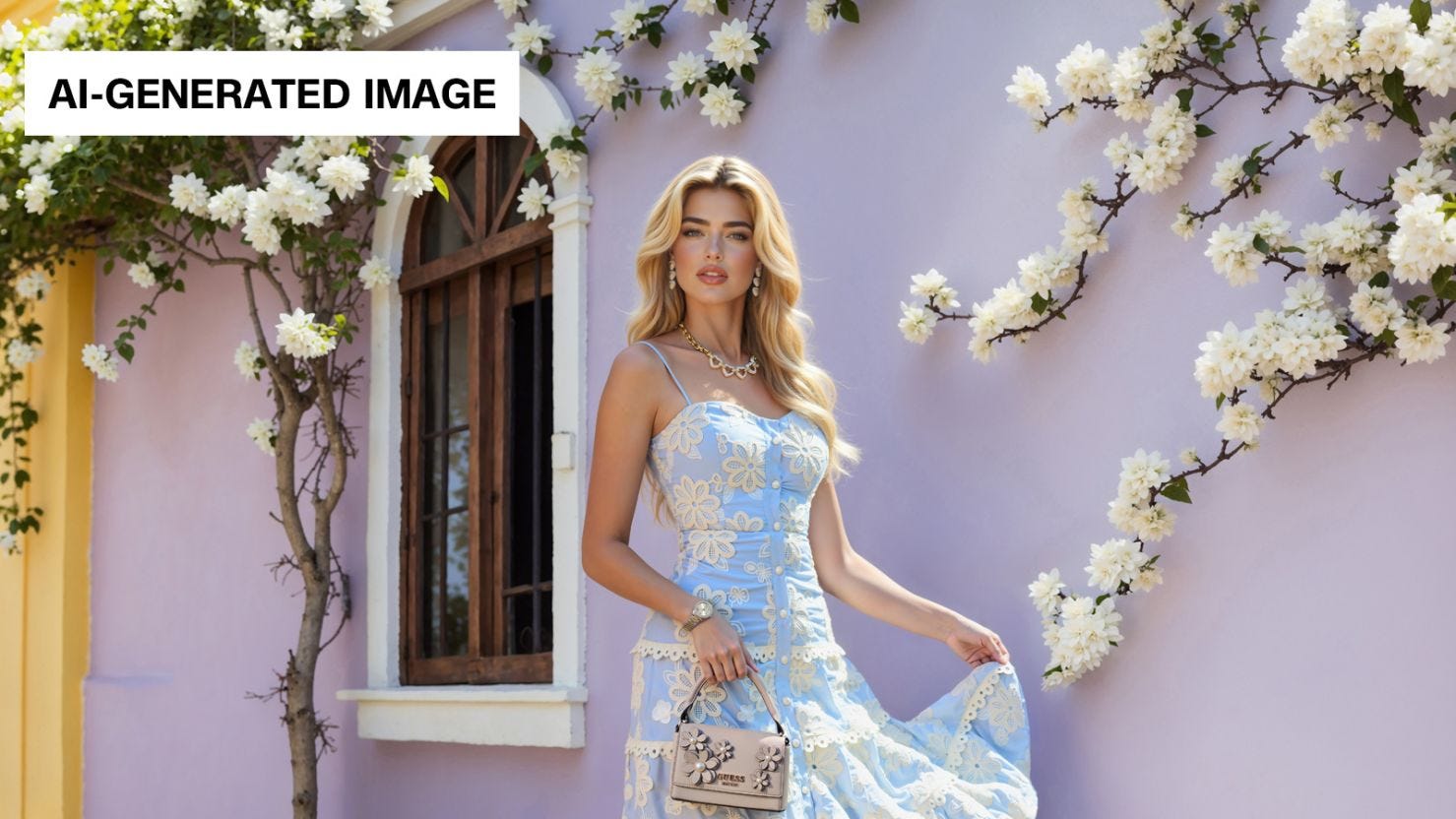
Guess recently ran a fully AI-generated advertisement in Vogue Magazine. No model. No photographer. No set. Just an image created by code.
Many people didn’t realize it. Others didn’t mind. Some were disturbed. And that quiet indifference may be the most telling response of all.
Because when fashion becomes indistinguishable from simulation, something fundamental shifts.
Let’s be honest about “real life”
No one is claiming fashion advertising has ever been documentary truth. Models aren’t “real life” in the literal sense. Professional photographers don’t capture reality as it exists.
But they are real people making intentional, creative choices. Bodies exist. Light behaves. Taste intervenes. A human eye decides what stays and what gets edited out.
That distinction matters.
AI doesn’t interpret. It calculates. It doesn’t see, it predicts. What was once a creative art form begins to move toward something else entirely: an algorithm optimizing for appeal.
Innovation or erasure?
AI models don’t age. Don’t resist. Don’t challenge norms unless instructed to. They are flawless by default, and therefore unaccountable.
Is that ethical? Or is it simply easier?
Efficiency is seductive. But fashion has never been about efficiency alone. It’s been about tension, taste, and perspective, things that don’t exist in code.
Where Maison Avenir stands
At Maison Avenir, we choose to work with live models and professional photographers/videographers. Not because the system is perfect, but because people are still part of the process.
Fashion should feel human. Not rendered.
Your turn
Would your perception of Maison Avenir change if we began using AI-generated models in our advertising?
This isn’t a rejection of the future.
It’s a question of what we’re willing to replace along the way.